Improving the Roast and Colour Profile of Roast Malt Beer
- Roast malt beer derives its colour and flavour from Maillard reactions, caramelisation, and controlled pyrolysis, creating notes of coffee, chocolate, caramel, and toasted bread.
- Optimising roasting conditions helps maximise rich colour development while avoiding harsh, burnt, and acrid flavours.
- Key quality factors include malt variety, moisture content, roasting temperature, residence time, extraction conditions, and fermentation control.
- Advanced techniques such as humidity-controlled roasting, real-time colour monitoring, and AI-driven process optimisation improve consistency and flavour balance.
- Scientifically optimised roast malt production enables brewers to achieve premium roasted character, natural colour, and improved product quality.
Introduction
Beer colour is one of the most important sensory attributes influencing consumer perception and acceptance. Dark beers obtain their distinctive appearance and flavour from roasted malts, which contribute colours ranging from deep amber to opaque black. Alongside colour, roasted malts generate desirable sensory characteristics such as coffee, chocolate, cocoa, caramel, toasted bread and smoky notes. However, excessive roasting may produce undesirable compounds associated with burnt, harsh, bitter, and acrid flavours. By controlling malt roasting parameters and brewing practices, it is possible to improve both the visual appeal and flavour complexity of roast malt beers.
Chemistry of Colour Development in Roasted Malt
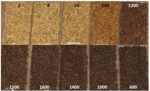
Fig. 1: Visual vs. analysed malt colour in EBC
Davies, N. : Perception of Color and Flavour in Malt (MBAA TQ, 2010)
Maillard Reactions
A complex series of reactions between reducing sugars and amino acids. The formed melanoidins are high-molecular-weight compounds responsible for:
-
Brown coloration
-
Enhanced body
-
Increased flavour complexity
-
Antioxidant activity
The concentration of melanoidins increases significantly with roasting temperature and duration.
Caramelisation
Caramelisation occurs when sugars decompose under elevated temperatures in the absence of amino compounds. This process contributes:
-
Deep amber colour
-
Toffee notes
-
Caramel flavours
-
Sweet aromatic compounds
Crystal and caramel malts are particularly rich in caramelisation products and are often blended with roasted malts to create balanced flavour profiles.
Pyrolysis Reactions
At temperatures exceeding approx. 200°C, pyrolytic degradation becomes significant. Pyrolysis generates:
-
Coffee-like aromas
-
Dark chocolate notes
-
Smoky flavours
-
Roasted aromas
Excessive pyrolysis can also produce undesirable compounds associated with burnt character and harsh bitterness.
Factors Influencing Roast Malt Beer Quality
Malt Variety
Selection of base malt significantly influences roasting performance. Characteristics associated with superior roast extract production include enzymatic activity, kernel size, moderate protein content (9–12%) and balanced carbohydrate composition.
Moisture Content
Initial moisture content directly affects heat transfer and reaction kinetics. Low moisture accelerates browning, promotes rapid temperature rise but increases risk of scorching. Moderate moisture improves reaction uniformity, enhances flavour complexity and supports controlled melanoidin formation.
Roasting Temperature
Temperature remains the dominant variable affecting colour intensity. A gradual temperature profile often produces superior flavour balance.
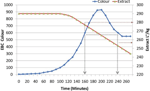 Fig. 2 : Temperature and Residence vs. maximum colour extraction
Davies, N. : Perception of Color and Flavor in Malt (MBAA TQ, 2010)
Residence Time
The interaction between temperature and roasting duration determines final colour development. But excessive roasting decreases extractability.
Strategies for Improving Roast and Colour Profiles
Controlled Humidity and Temperature Roasting
Injecting steam or controlling relative humidity and temperature during roasting provides several advantages:
-
Uniform heat distribution
-
Enhanced Maillard chemistry
-
Reduced surface scorching
-
Improved colour homogeneity
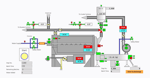 Fig. 3 : Set up of roaster with control of heat and moisture during roasting
Optimisation of Extraction Conditions
Even when roasting is optimised, extraction significantly affects final product quality. Critical extraction variables include:
-
Water temperature
-
pH
-
Extraction time
-
Solid-to-liquid ratio
Fermentation Control
When producing roast malt beer for the brewing sector a crucial step is fermentation with lager yeast. This step does not only fulfil legislative needs as to comply with e.g. German Reinheitsgebot but does also influence the physical-chemical stability of the finished product and its behaviour when added to a base beer for colour correction or late-stage brand differentiation.
By adding controlled amounts of pale malt or its complete absence the sugar content of the roast malt wort can be controlled and successive fermentation intensity controlled. Natural stabilisation of colour, haze, and foam stability are influenced by fermentation in roast malt beers in the same way as in regular brews. To maintain superior quality and lowest impact on final beer quality fermentation is a key factor in roast malt beer production.
Integration of Real-Time Colour Monitoring
Modern production facilities increasingly employ instrumental colour measurement. Common systems include spectrophotometric analysis, NIR spectroscopy, and computer vision imaging as well as real-time optical sensors. These technologies allow operators to monitor colour development continuously and minimise batch variability, thus improve process reproducibility.
Artificial Intelligence and Process Monitoring
Machine learning systems can predict final colour values, flavour compound formation, and product consistency. These systems enable predictive control strategies and reduce production variability.
Conclusion
Improving the roast and colour profile of roast malt extract requires a comprehensive understanding of thermal processing, Maillard chemistry, extraction science, and quality control. The balance between colour generation and flavour development is influenced by malt characteristics, moisture content, roasting temperature, residence time, and extraction conditions. Advanced predictive modelling offers significant opportunities for enhancing product consistency and sensory quality. As consumer demand grows for premium roasted flavours and naturally derived colour ingredients, scientifically optimised roast malt extract production will continue to play a crucial role in brewing and food manufacturing industries.
 Fig. 4 : Flavour profiles of various malt extracts